
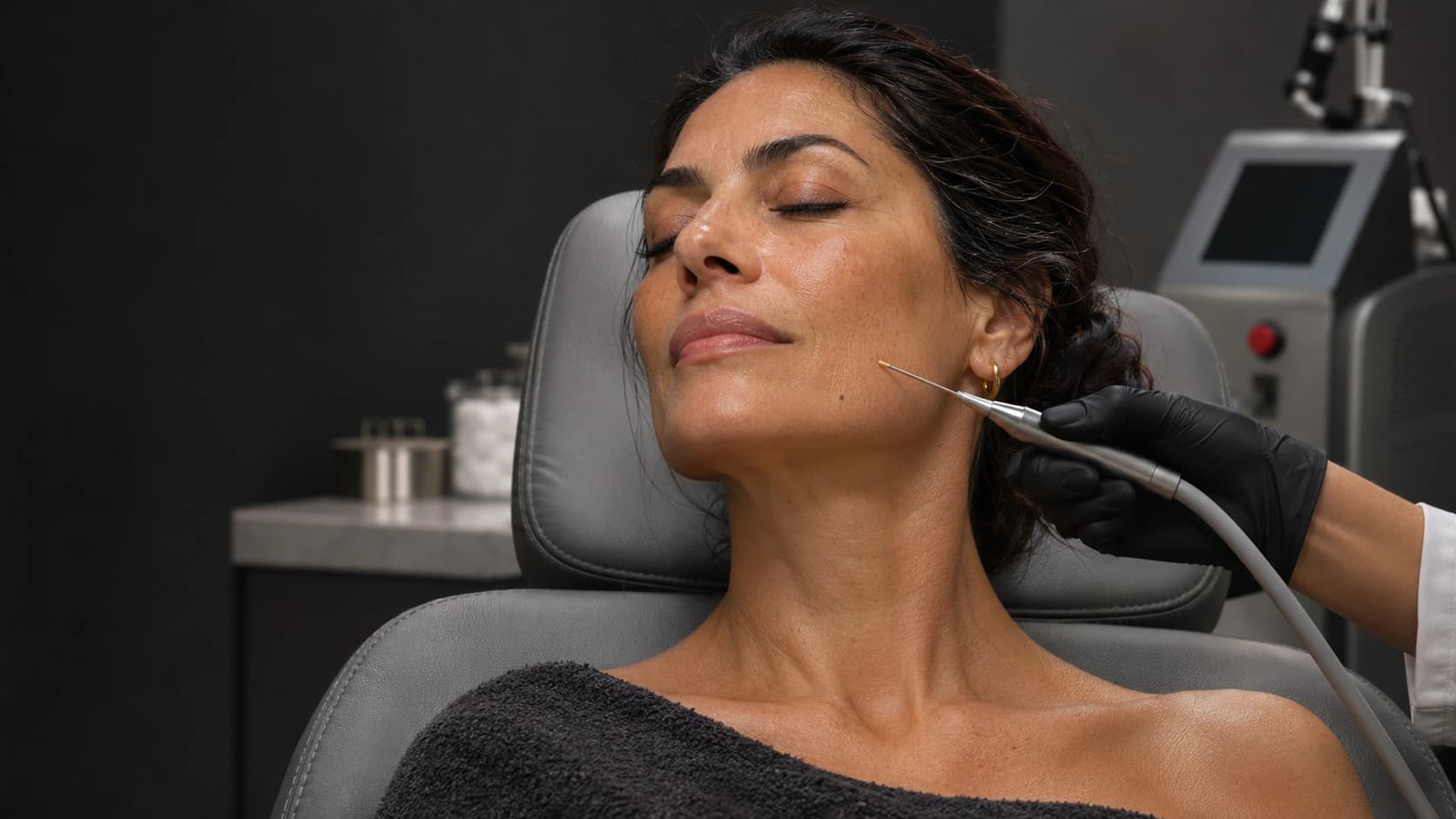
Morpheus8 vs HIFU: Skin Texture, Laxity & Recovery
Compare Morpheus8 and HIFU for skin texture and laxity, including how they work, recovery, risks and questions for an assessment in Mayfair.
Morpheus8 vs HIFU: the short answer
When comparing Morpheus8 vs HIFU, neither treatment is universally better. HIFU may be more relevant where the main concern is mild lower-face laxity, a softer jawline or early jowl formation. Morpheus8 may be more relevant where laxity appears alongside uneven texture, enlarged pores, fine lines or acne scarring.
Both treatments aim to encourage skin remodelling, but they work at different depths and in different ways. HIFU uses focused ultrasound energy beneath the skin surface, while Morpheus8 combines microneedling with radiofrequency energy. A careful assessment matters because skin quality, facial volume, degree of laxity, previous treatments and expectations can all affect which option is more appropriate.
How Morpheus8 and HIFU differ
What is HIFU?
HIFU, or high-intensity focused ultrasound, is a non-surgical treatment designed to deliver ultrasound energy to selected layers beneath the skin. It is commonly considered for early loss of firmness around the jawline, lower face, cheeks, neck and brow area.
The intention is to create focused thermal points in deeper tissue without puncturing the skin surface. Over time, the body’s healing response may support collagen remodelling. HIFU is therefore generally more focused on skin support and mild lifting than on treating surface-level texture concerns.
What is Morpheus8?
Morpheus8 is a form of radiofrequency microneedling. Fine needles create controlled microchannels in the skin while radiofrequency energy is delivered at selected depths. The treatment is intended to support collagen and elastin remodelling while also addressing aspects of skin texture.
For this reason, Morpheus8 is often considered when a person has early laxity together with concerns such as crepey skin, fine lines, acne scarring, uneven texture or visible pores. It may be used on areas including the lower face, jawline, cheeks and neck, depending on individual suitability.
Unlike HIFU, Morpheus8 involves needles entering the skin. This can make it less suitable for someone with an active skin infection, significant inflammation or certain healing-related concerns at the proposed treatment site.
Morpheus8 vs HIFU by concern
Jawline definition and early jowls
For a jawline that has begun to look less defined because of mild skin laxity, HIFU may be considered because it targets deeper supporting layers. It may suit someone whose principal concern is a subtle downward shift in the lower face rather than skin texture.
Morpheus8 for jowls may be considered where mild jowl formation occurs alongside thinner, crepey or uneven skin around the jawline. The radiofrequency microneedling approach can be useful where skin quality is part of the concern, rather than laxity alone.
Neither treatment can reliably recreate the result of surgery where there is substantial loose skin, pronounced jowling or more significant facial descent. Facial anatomy, volume loss and skin elasticity all influence what may be achievable. In some cases, treating skin laxity without considering volume changes may not produce the balanced result a person hopes for.
Lower-face laxity
HIFU may be the more logical starting point for early lower-face laxity where the skin surface is otherwise relatively smooth. It does not involve skin punctures, although it can still cause discomfort during treatment and temporary tenderness afterwards.
Morpheus8 may be more relevant where lower-face laxity is mild and accompanied by visible textural changes. A practitioner should assess whether the planned depth and treatment area are appropriate, particularly in naturally leaner faces or areas where preserving facial volume is important.
Skin texture, pores and acne scarring
Morpheus8 is usually the more directly relevant option for texture-focused concerns because microneedling and radiofrequency act within the skin itself. It may be considered for uneven texture, fine lines, acne scarring and pores as part of an individual treatment plan.
HIFU is not generally chosen as the primary option for surface texture. While an improvement in overall skin firmness may make the skin look fresher for some people, it does not work in the same way as a treatment designed to resurface or remodel the skin more directly.
Early signs of ageing
Where early ageing is mainly visible as a slight reduction in facial firmness, HIFU skin tightening suitability may be worth discussing. Where the concern includes fine lines, roughness and a less even skin surface, Morpheus8 may be the more relevant treatment to explore.
Some people may be assessed for both approaches at different stages of a wider plan. This is not automatically necessary, and combining treatments should not be treated as a standard solution. The order, spacing and rationale should be based on the person’s skin, treatment history and goals.
What treatment feels and recovery may involve
HIFU is often described as a sensation of warmth, tingling or brief deeper discomfort as energy is delivered. Sensitivity varies considerably between people and treatment areas. The skin may look red or feel tender after treatment, and some people experience temporary swelling, bruising or altered sensation.
Morpheus8 treatment involves microneedling, so topical numbing measures may be discussed where appropriate. Afterwards, it is common to have redness, swelling, pinpoint bleeding or a temporary grid-like appearance. The skin needs careful aftercare while it settles, including avoiding picking, friction and products that a practitioner advises against.
Recovery and visible changes vary. Neither treatment should be booked immediately before an important event without allowing for the possibility of swelling, redness, bruising or an unexpected skin reaction.
Risks, limitations and who may not be suitable
Although both are non-surgical procedures, they are not risk-free. The potential benefits should be weighed against possible adverse effects and the limits of what non-surgical skin tightening can achieve.
- HIFU risks: discomfort, temporary redness, swelling, tenderness, bruising, tingling or numbness. Uncommon but more serious complications can include burns or temporary nerve-related effects.
- Morpheus8 risks: pain, redness, swelling, bruising, infection and pigment changes. Serious complications reported with certain uses of RF microneedling include burns, scarring, fat loss and nerve damage. Discuss device settings, your anatomy and the risk of unwanted tissue changes with the treating practitioner.
- Limitations: results vary and may be subtle. Neither procedure can remove a large amount of loose skin or guarantee a particular degree of lifting, jawline definition or scar improvement.
An assessment should cover skin type, active acne or infection, scarring history, previous facial procedures, implants, injectable treatments, relevant medical conditions and medicines. People who are pregnant or breastfeeding, have an active infection or have certain implanted devices may need to postpone treatment or may not be suitable. A qualified clinician or appropriately trained practitioner should make this decision on an individual basis.
Questions to ask at a HIFU vs Morpheus8 consultation
A useful consultation should not simply recommend the newest or most intensive option. It should establish what is causing the concern and whether the proposed treatment is proportionate.
- Is my main issue skin texture, laxity, volume loss or a combination of these?
- What improvement is realistically possible for my degree of jowling or lower-face laxity?
- Why is HIFU or Morpheus8 being recommended for my anatomy and skin quality?
- What are the likely side effects in my case, and what should I do if they do not settle as expected?
- Could previous filler, surgery, skin treatments or a medical condition affect the plan?
- What alternatives, including doing nothing, should I consider?
Frequently asked questions
Can HIFU get rid of jowls?
HIFU may be considered for mild jowling linked to early skin laxity, but it cannot guarantee removal of jowls. More pronounced jowls can involve skin laxity, fat distribution, volume loss and structural changes that may not respond sufficiently to a non-surgical treatment.
Is Morpheus8 better than HIFU for the jawline?
It depends on the cause of the concern. HIFU may be more relevant for deeper mild laxity, while Morpheus8 may be more relevant when the jawline area also has textural change, fine lines or acne scarring. An in-person assessment is needed to decide whether either option is suitable.
Can Morpheus8 and HIFU be combined?
They can sometimes be included in a broader treatment plan because they work differently. However, combining them is not suitable or necessary for everyone. A practitioner should consider skin condition, previous treatments, comfort, recovery and whether there is a clear clinical reason to use both.
Discuss your options in Mayfair.
Meet the team at 205 Regent Street, London. Talk through suitability, realistic expectations, recovery and your personalised treatment plan.
Explore Morpheus8 FaceView current prices & bookSources & further reading
First published . Updated .