
Hair Loss Consultation in London: What Scalp Analysis Shows
Find out what a scalp examination can tell you about shedding or thinning, what to bring and when further investigation may help.
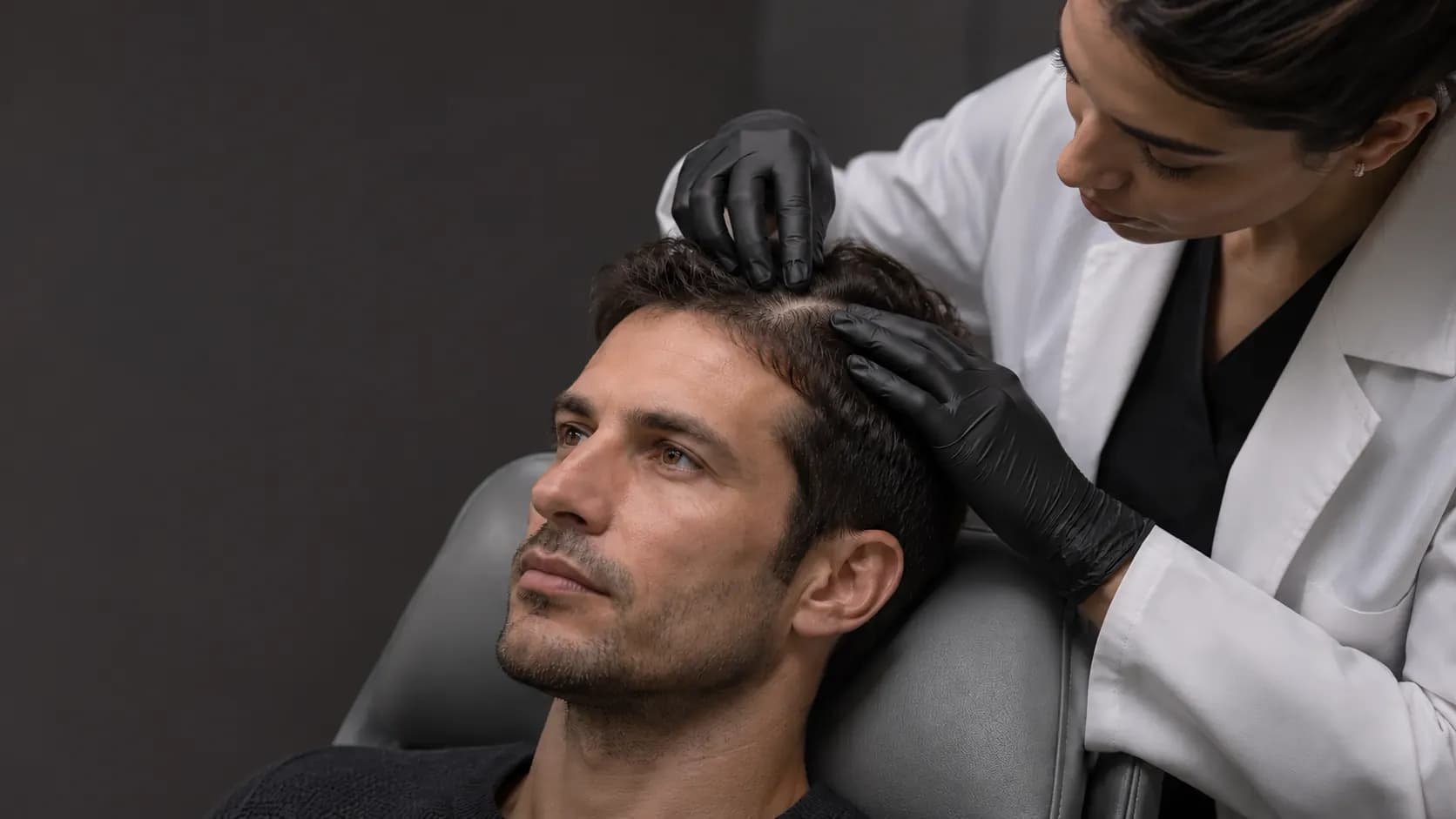
A hair loss consultation starts with two questions. Is hair shedding faster than usual, or is it gradually becoming finer in a particular area? Your history and a scalp examination can narrow down the cause. A magnified photograph alone cannot establish every diagnosis.
What happens during a scalp assessment?
The practitioner looks at the distribution of thinning, compares the affected areas with relatively unaffected scalp and checks for scaling, redness or signs of inflammation. A magnifying device called a trichoscope can help show differences in hair thickness and the appearance of follicle openings.
What is worth bringing?
A photograph from before you noticed the change can be more informative than counting hairs on your pillow. Bring older pictures of your parting, temples or crown in comparable light. Note when you first noticed the change, any itching or pain, recent illness and changes to medicines. Include hair extensions, tight hairstyles or chemical treatments in the conversation.
When would you need another assessment?
Where the pattern or history suggests a medical cause, a GP or dermatologist may consider targeted blood tests or another investigation. A rapidly developing patch, a painful scalp or skin that appears to be scarring deserves medical assessment before a cosmetic procedure.
Ask for the working diagnosis, what remains uncertain and how change would be measured. Baseline pictures taken with the same parting, lighting and distance give you a sensible comparison if you return.
Discuss your options in Mayfair.
Meet the team at 205 Regent Street, London. Talk through suitability, realistic expectations, recovery and your personalised treatment plan.
Explore hair loss assessmentView current prices & bookSources & further reading
First published . Updated .