
Who Should Avoid Co2 Laser Resurfacing? Safety Checks
Explore Co2 laser suitability, skin tone, scarring, medicines and healing risks, plus questions to discuss before resurfacing at MHB Aesthetic.

Who should avoid Co2 laser resurfacing?
Co2 laser resurfacing is not suitable for everyone. People with an active skin infection, a tendency to form raised scars, certain medical conditions, poor wound healing, recent sun exposure or unrealistic expectations may need to avoid treatment, postpone it or consider a different approach.
If you are researching who should avoid Co2 laser resurfacing, it is important to know that suitability depends on more than the concern you want to treat. A clinician should assess your skin type, medical history, medication, previous scarring, lifestyle and ability to follow aftercare before recommending an ablative laser procedure.
What is Co2 laser resurfacing?
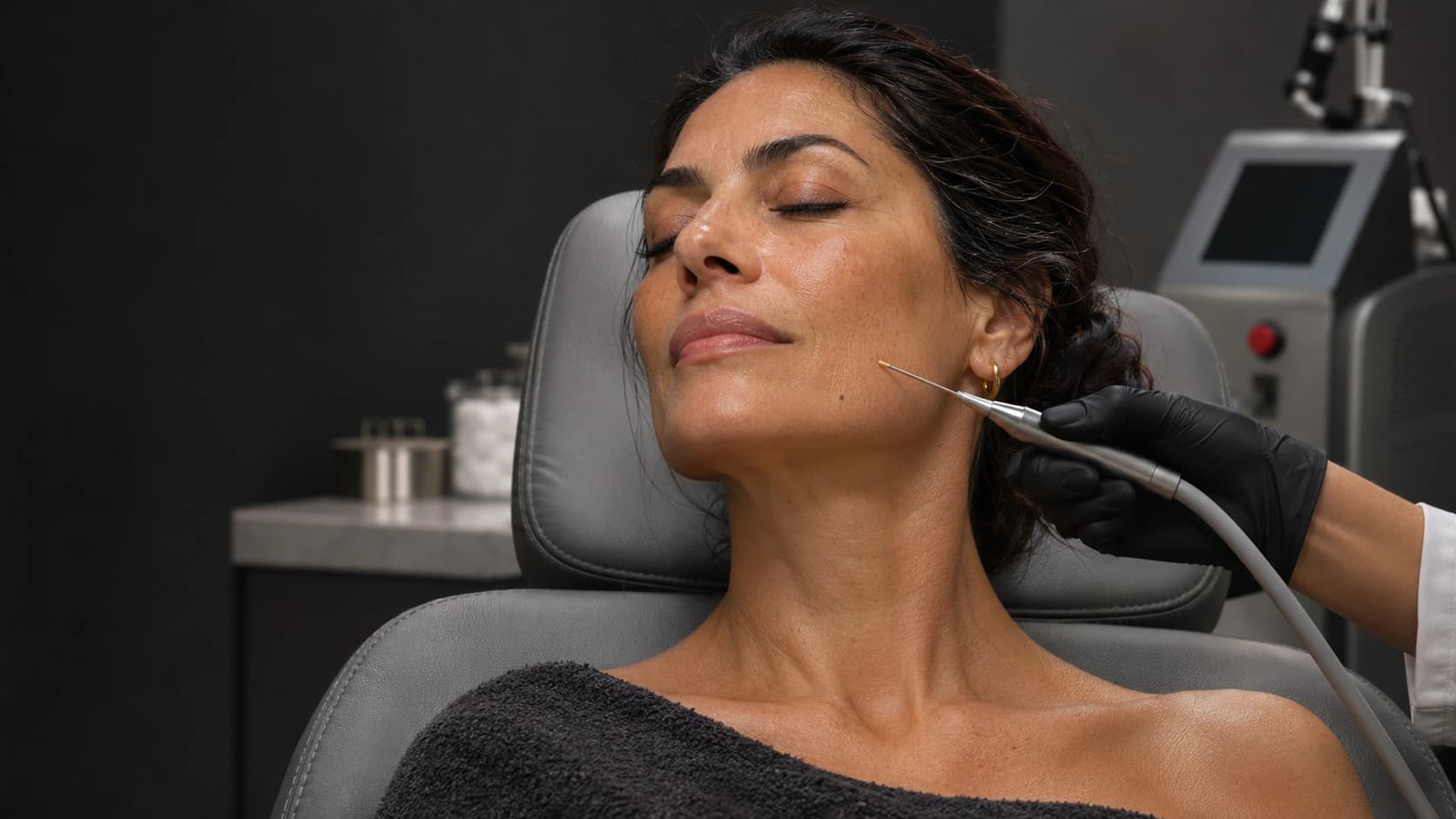
Co2 laser resurfacing uses a carbon dioxide laser to create controlled microscopic areas of injury in the skin. This is intended to stimulate the skin’s repair process and may be used for concerns such as textural irregularity, photoageing, fine lines and some types of acne scarring.
Fractional Co2 lasers leave areas of untreated skin between the treated columns, which can support healing compared with fully ablative resurfacing. However, fractional treatment is still an ablative procedure: it disrupts the outer layers of skin and involves meaningful recovery, aftercare and potential complications.
The depth and intensity of treatment can be adjusted, but a lower setting does not remove all risk. Results vary between individuals, and improvement cannot be guaranteed.
Who should avoid Co2 laser resurfacing or delay treatment?
Some circumstances are clear reasons to postpone treatment, while others require a careful individual risk assessment. A qualified clinician should decide whether treatment is appropriate and whether another option may be safer.
People with an active infection or inflamed skin condition
Co2 laser treatment should generally be deferred if you have an active cold sore, bacterial skin infection, fungal infection, open wound, severe acne flare, eczema flare or other active inflammation in the intended treatment area. Treating compromised skin may increase the risk of infection, delayed healing and scarring.
Cold sores are caused by the herpes simplex virus and can recur following procedures that disrupt facial skin. The NHS information on cold sores explains their cause and tendency to recur. Tell your clinician if you have ever had cold sores, even if you do not have one at the time of consultation.
People with a history of problematic scarring
People who have developed keloid scars or hypertrophic scars after injuries, surgery, piercings or previous procedures may have a higher risk of abnormal scarring following laser resurfacing. Keloids extend beyond the original wound boundary, while hypertrophic scars remain within it but can become thickened and raised.
This does not always mean that every laser treatment is impossible, but ablative resurfacing may be unsuitable or require a particularly cautious approach. Your clinician should ask about personal and family scarring history before treatment.
People prone to pigmentation changes
Co2 laser resurfacing can trigger post-inflammatory hyperpigmentation, where treated skin becomes darker during healing. It can also, less commonly, cause hypopigmentation, where areas become lighter. These changes can be especially noticeable and persistent in some people with darker skin tones or in those with a previous history of pigmentation after spots, injuries or procedures.
Skin tone alone should not be used as a reason to dismiss someone without assessment. However, the treatment settings, preparation, aftercare and alternatives need careful consideration.
People with recent sun exposure or a tan
Recently tanned, sunburnt or heavily sun-exposed skin is usually not appropriate for Co2 laser resurfacing. Increased pigment activity can raise the risk of uneven pigmentation and make it harder to assess the skin accurately.
Your clinician may advise delaying treatment until the skin has returned to its usual baseline colour. You should also be willing and able to follow sun-protection advice during recovery and in the months after treatment.
People who may have impaired healing
Conditions or circumstances that affect wound healing need close assessment. These can include poorly controlled diabetes, significant circulation problems, immune-system conditions, immunosuppressive treatment, smoking or nicotine use, nutritional difficulties and some previous radiotherapy treatments in the area.
These factors do not automatically rule out every procedure, but they may make ablative laser treatment less suitable or increase the need for medical oversight. Do not stop prescribed medicines or change treatment plans in preparation for a cosmetic procedure without advice from the clinician responsible for your care.
Pregnancy and breastfeeding
Co2 laser resurfacing is usually postponed during pregnancy because it is an elective procedure and there is limited safety evidence for many cosmetic interventions during this time. If you are breastfeeding, your clinician should consider your individual circumstances, proposed aftercare and any medicines that may be relevant to the procedure.
People taking certain medicines or using skin products
A Co2 laser consultation should include a full review of prescription medicines, over-the-counter products, supplements and skincare. Some medicines may affect healing, bleeding, inflammation, infection risk or sensitivity to light. Strong active skincare products can also irritate the skin before or after treatment.
Particular care is needed if you have used oral acne treatment in the past or are currently using prescription acne medication. The implications vary according to the medicine, dose, timing, your skin and the planned procedure. Do not assume a standard waiting period applies to everyone; ask the treating clinician for individual advice.
People with unrealistic expectations
Co2 laser resurfacing may improve selected skin concerns, but it cannot make skin flawless, erase every scar or stop future ageing. Deep scars, substantial skin laxity, very deep lines and active acne may need a different treatment strategy, a combination approach or no treatment at all.
A responsible practitioner should be prepared to say when Co2 laser resurfacing is unlikely to provide a worthwhile benefit relative to its recovery and risk.
Co2 laser resurfacing risks to understand before deciding
Even in an appropriate candidate, Co2 laser resurfacing carries risks. Expected short-term effects can include redness, swelling, tenderness, warmth, oozing, crusting and peeling. Recovery differs according to the treatment intensity, area treated and individual healing response.
Potential complications include:
- Prolonged redness or swelling
- Infection, including reactivation of cold sores
- Post-inflammatory hyperpigmentation or hypopigmentation
- Acne-like eruptions or milia
- Delayed healing
- Persistent texture changes
- Scarring, including abnormal raised scarring in susceptible individuals
- Unsatisfactory improvement or a mismatch between expected and actual results
Risk can be reduced through appropriate patient selection, conservative settings where suitable, sterile technique and careful aftercare, but it cannot be removed entirely. Seek prompt medical advice if you develop worsening pain, spreading redness, pus, fever, blisters or any concern about unexpected healing after a procedure.
What should happen at a Co2 laser consultation?
A thorough Co2 laser consultation is a safety assessment, not simply a discussion of the skin concern you would like to improve. You should have enough time to ask questions and consider whether the proposed procedure feels appropriate for you.
A clinician should usually discuss:
- Your main concern, how long it has been present and previous treatments
- Your medical history, including diabetes, immune conditions, healing problems and allergies
- Current and recent medicines, supplements and topical skincare
- Cold sores, acne, eczema, rosacea, psoriasis and other skin conditions
- Previous scarring, pigmentation changes or reactions to cosmetic procedures
- Your skin tone, recent sun exposure and usual sun-protection habits
- Smoking or nicotine use where relevant to healing
- Realistic benefits, limitations, downtime, risks and aftercare requirements
- Whether a patch test, staged treatment or a non-ablative alternative is more appropriate
You should also be told who will perform the procedure, what training and clinical oversight they have, and what support is available if you have concerns afterwards.
Are there alternatives if fractional Co2 laser is not suitable?
Yes. Being unsuitable for fractional Co2 laser treatment does not mean there are no options for your skin concern. The right alternative depends on whether the main issue is pigmentation, acne scarring, redness, enlarged pores, fine lines, laxity or another condition.
Depending on your assessment, a clinician may discuss gentler laser approaches, non-ablative energy-based treatments, microneedling, chemical peels, medical skincare, scar-specific procedures or referral to a dermatologist. Some concerns are better managed by treating the underlying condition first, particularly active acne, eczema, rosacea or pigment disorders.
It is reasonable to ask why a particular option has been recommended, what recovery it involves, what risks apply to your skin and what outcome would be realistic.
Frequently asked questions
Can people with darker skin have Co2 laser resurfacing?
Some people with darker skin tones may be suitable, but there can be a higher risk of post-inflammatory pigmentation changes. An experienced clinician should assess your individual skin, history of pigmentation and the appropriateness of the proposed laser settings. Alternatives may sometimes offer a more favourable risk-benefit balance.
Can I have Co2 laser resurfacing if I get cold sores?
You should disclose any history of cold sores before treatment. Facial resurfacing can trigger a recurrence, so the clinician may decide that treatment should be delayed, modified or supported with an appropriate medical plan. Never conceal a cold sore history because it seems minor.
Is fractional Co2 laser safer than fully ablative Co2 laser?
Fractional treatment generally leaves untreated skin between treatment columns, which may support recovery. However, it remains an ablative procedure with risks including infection, pigmentation changes and scarring. “Fractional” should not be interpreted as risk-free.
Discuss your options in Mayfair.
Meet the team at 205 Regent Street, London. Talk through suitability, realistic expectations, recovery and your personalised treatment plan.
Explore Co2 laserView current prices & bookSources & further reading
First published . Updated .