

Hair Transplant for Diffuse Thinning: Who Is Suitable?
Can a hair transplant help diffuse thinning? Understand donor-area assessment, ongoing hair loss, realistic coverage, risks and when surgery should wait.
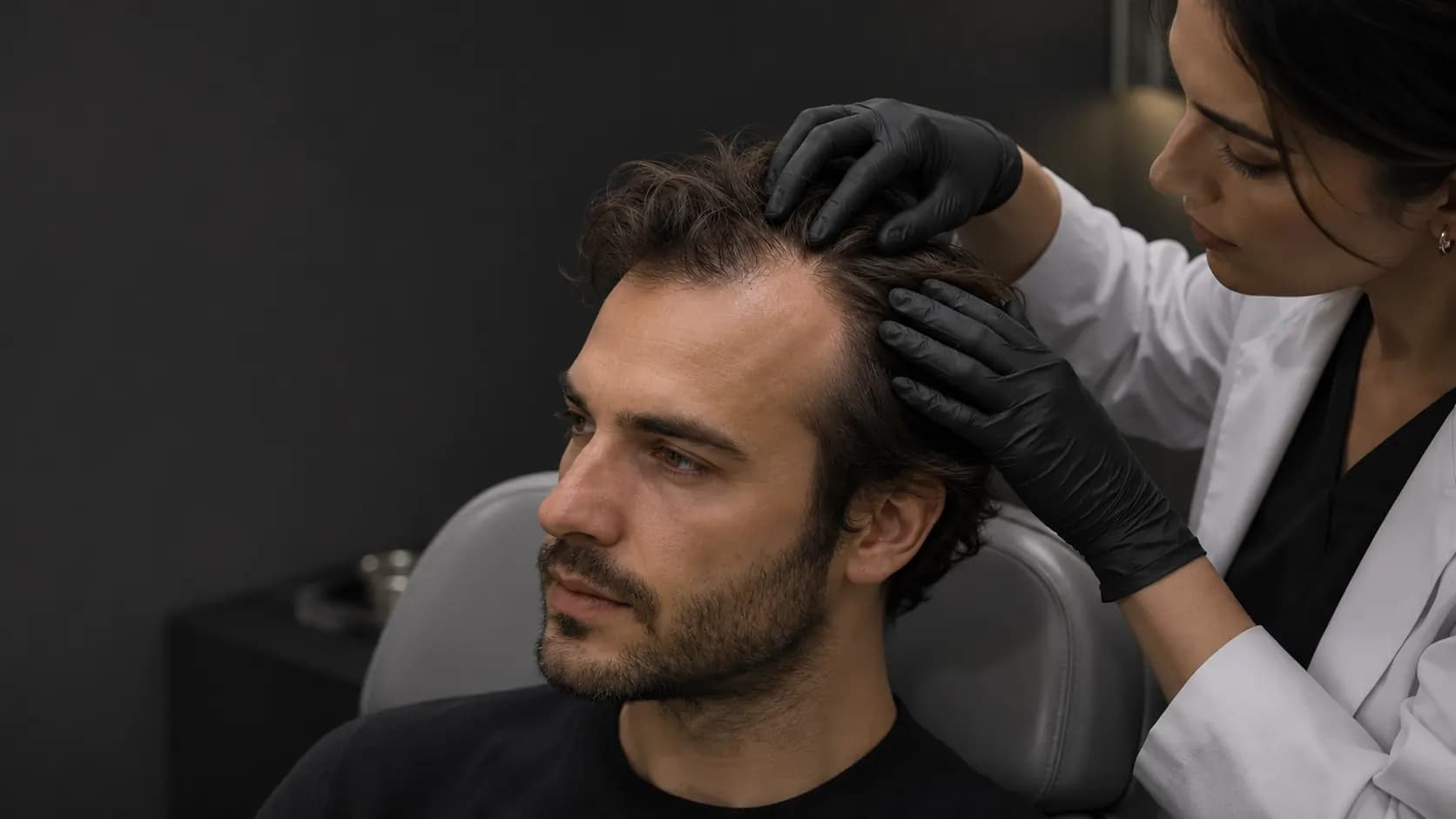
A hair transplant can help selected people with diffuse thinning, but it is not automatically the right treatment. Diffuse thinning means reduced density across a broad part of the scalp. Suitability depends on the cause, the stability of the hair loss and whether a reliable donor area remains.
Transplantation moves existing follicles; it does not create an unlimited supply of hair. A useful assessment therefore considers both the area you want to improve and the hair that must remain at the back and sides after harvesting.
Find the cause before planning surgery
Diffuse thinning is a description, not a diagnosis. Pattern hair loss can present this way, but illness, stress, weight loss, iron deficiency and other factors can also cause shedding. Some causes are temporary or require medical management rather than surgery.
Tell the clinician when the change began, whether shedding is ongoing and whether you have scalp symptoms. Bring a medicines list and any previous assessments. Seek GP advice when the cause is uncertain, particularly before spending money on a commercial hair-loss treatment.
Photographs can help show change over time, but lighting, styling and wet hair affect how much scalp is visible. A photograph alone cannot confirm a stable donor zone or determine the number of grafts you need.
Why the donor area matters more than a graft target
The back and sides of the scalp are commonly assessed for donor hair. The surgeon needs to consider density, hair thickness, previous extraction and whether follicles in that region are themselves becoming finer. A donor supply that looks adequate from a distance may not be suitable on closer examination.
Diffuse unpatterned alopecia, often shortened to DUPA, can involve the areas normally used as donor zones. If there is no reliably preserved donor region, conventional transplantation may be inappropriate. This cannot be ruled out simply because the front appears thinner than the back.
A plan should protect the appearance of the donor area as well as improve a priority recipient area. Ask the surgeon to explain the limits of harvesting rather than choosing a clinic by the largest advertised graft number.
When a transplant may be worth considering
The decision becomes more meaningful when there is an established diagnosis, a sufficiently stable pattern, suitable donor hair and a realistic goal. For example, a person might prioritise framing the face rather than expecting dense coverage across the entire scalp.
Existing hair also affects placement and future planning. Discuss how the transplanted area might look if surrounding native hair continues to thin. An attractive short-term plan should not use up donor options without considering that possibility.
- Ask which area would be prioritised and why.
- Ask what density can reasonably be achieved with the available donor supply.
- Discuss the expected appearance if no further surgery is performed.
- Clarify whether monitoring or non-surgical management should come first.
When surgery should wait or may not be appropriate
Unexplained active shedding, scalp inflammation, uncertain donor stability or expectations beyond the available supply are reasons to reassess the plan. The next step may be investigation, treatment of an underlying condition or observation over time.
Women with diffuse thinning also need an individual diagnosis and donor assessment. Neither sex nor a widening parting establishes candidacy on its own. A surgical consultation should leave room for the conclusion that surgery is not advisable.
Risks and recovery with existing hair
Transplant surgery can cause bleeding, infection, scarring and a disappointing result. Existing hair may shed after surgery, and further native-hair loss can change the appearance later. Ask the surgeon how these issues affect your particular pattern and which risks may be lasting.
Healing and visible growth happen on different timelines. Obtain written washing, activity and follow-up instructions, along with a contact route for unexpected symptoms. Do not judge the final result from the early postoperative appearance or a promotional photograph taken under different conditions.
Pricing for an individual plan
MHB’s current general hair-transplant starting price is £2,499, confirmed by the clinic on 12 November 2026. This is not a fixed price for diffuse thinning or a promise that every candidate qualifies for that starting price. The surgical assessment determines suitability and the proposed scope.
Ask for the full written quote and check the current booking information before proceeding. Graft planning, included aftercare and any additional treatment should be explained separately rather than inferred from a headline price.
Common questions
Can a transplant restore the original density everywhere?
No. Donor supply is limited. The plan should explain which areas can be improved and where expectations need to be more modest.
Does FUE make donor assessment less important?
No. The extraction method does not make an unstable or insufficient donor area suitable. Donor protection remains central to planning.
What should I bring to a consultation?
Bring your hair-loss history, medicines, previous treatment details and comparable photographs if available. Be ready to discuss your priority areas and your expectations for future hair loss.
Discuss your options in Mayfair.
Meet the team at 205 Regent Street, London. Talk through suitability, realistic expectations, recovery and your personalised treatment plan.
Explore hair transplant assessmentView current prices & bookSources & further reading
- NHS: causes and assessment of hair loss
- NHS: hair transplantation
- IAHRS: assessing the donor area
- MHB: donor-area assessment guide
- MHB: current hair-transplant cost guide
First published . Updated .