

Scalp Micropigmentation vs Hair Transplant: What Each Can Do
Compare the visual effect of scalp pigment with growing transplanted hair, including hairstyle, donor supply, maintenance and future thinning.
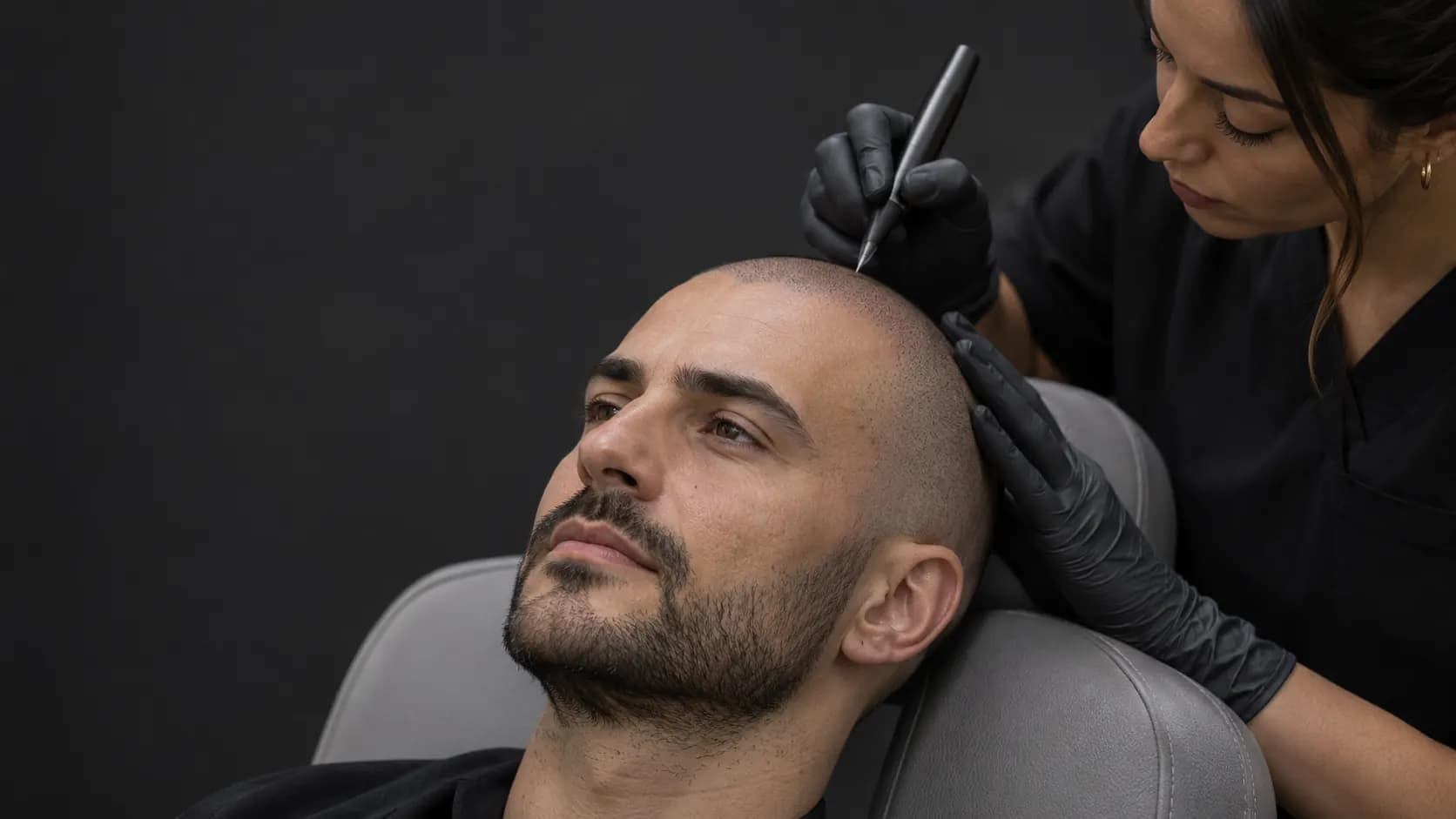
Scalp micropigmentation places small dots of pigment in the skin to create the impression of a close shave or reduce contrast in areas of thinning. Hair transplantation moves living follicles from a donor area. One changes the appearance of visible scalp; the other can produce growing hairs that can be cut and styled.
Start with the hairstyle you want
If you like a very short cut, pigment can echo the appearance of stubble. If you want length or movement in an area that is bare, pigment cannot produce that texture. Under longer, thinning hair it may soften the contrast with the scalp, but coverage changes with lighting and the way the hair is parted.
What happens over time?
Pigment can fade or change in appearance and may need maintenance. Correcting the colour or hairline can be difficult. Surgery uses a limited supply of donor hair and leaves extraction scars. Hair already present around the grafts may continue thinning, which can affect the original design.
Can the approaches be combined?
Some people consider pigment for the appearance of a healed scar or residual thinning after surgery. Have the surgeon assess healing and let growth develop before deciding where pigment belongs. Ask to see relevant healed examples under ordinary light and discuss how a shorter or longer haircut would change the appearance.
Discuss your options in Mayfair.
Meet the team at 205 Regent Street, London. Talk through suitability, realistic expectations, recovery and your personalised treatment plan.
Explore scalp micropigmentationView current prices & bookSources & further reading
- International Society of Hair Restoration Surgery on scalp micropigmentation
- NHS guide to hair transplant surgery
First published . Updated .