

What Happens to Existing Hair After a Hair Transplant?
Distinguish early shedding from continuing native hair loss after a transplant. Learn which questions to ask before placing grafts among existing hair.
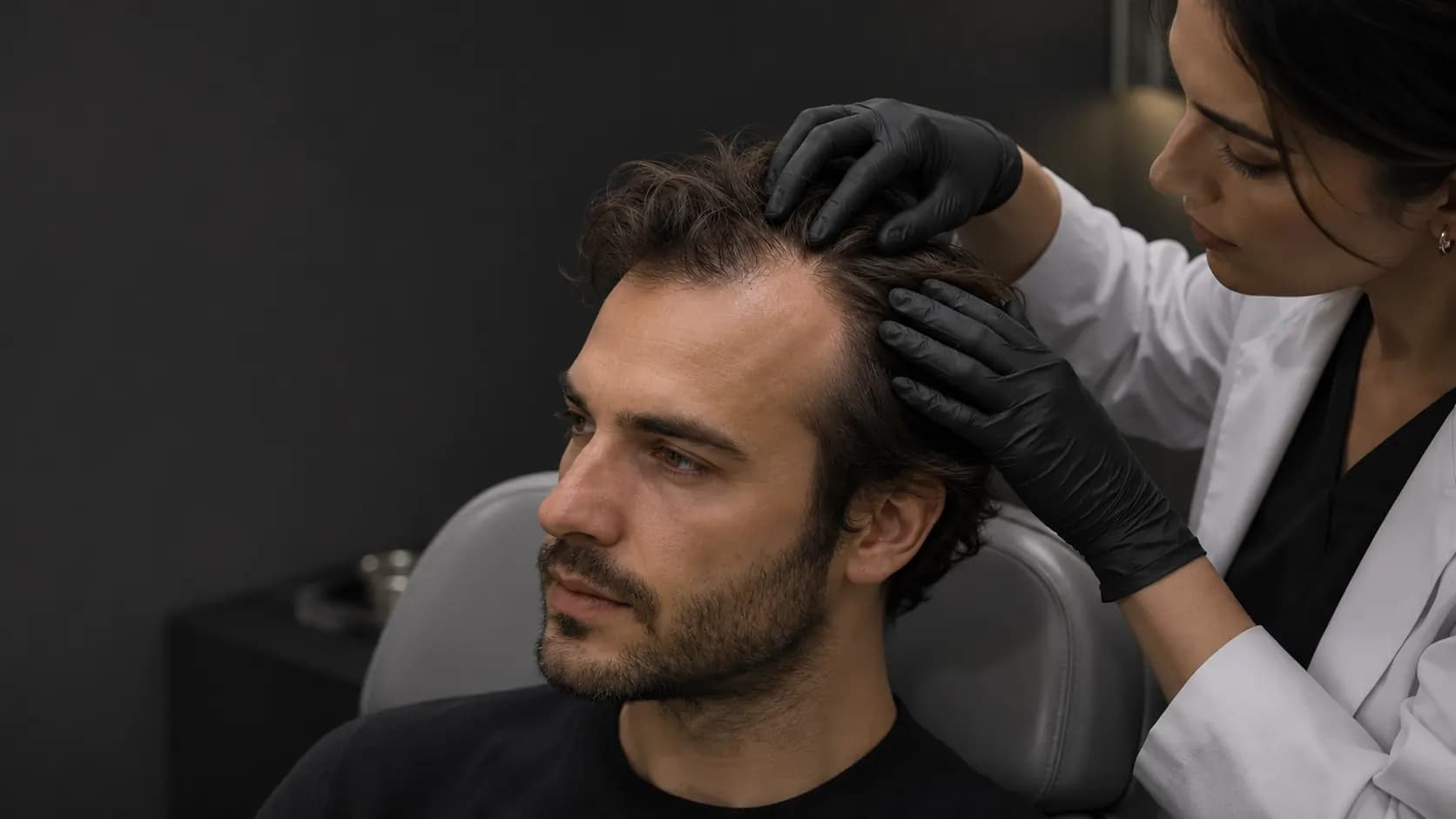
A scalp after hair transplantation contains newly placed grafts and the native hair that was already growing there. These can change on different schedules. Surgery redistributes follicles from the donor area. The underlying process affecting your remaining hair can continue after the operation.
Which hair is shedding?
Many transplanted shafts shed during the early recovery period before new growth appears. Some existing hair near the recipient area can shed after the disturbance of surgery too. Clinicians sometimes call this shock loss. A photograph of fallen hairs alone cannot establish their origin or how much density will return. Tell the surgical team when the change started and show the areas affected.
Why the surrounding hair matters to the design
A denser transplanted hairline may stand out later if hair behind it thins. Ask the surgeon to show the area they plan to treat alongside the area they expect to monitor. Where thinning is diffuse, examination of the back and sides matters as much as the front because future options depend on the remaining donor supply.
How to follow changes reliably
Compare pictures using a similar haircut, parting, lighting and head position. Mark the date and keep the preoperative images as a baseline. Ask at review which changes fit healing, whether native loss is continuing and whether you need a medical assessment or a change to the long-term plan.
When to contact the surgical team
New shedding accompanied by increasing pain, discharge, spreading redness or fever needs prompt clinical advice. A new patch of loss or an unexpected change later in recovery also deserves assessment. Discuss any new medicine or hair-loss treatment with the clinician responsible for your care, including its likely benefit for your specific diagnosis.
Discuss your options in Mayfair.
Meet the team at 205 Regent Street, London. Talk through suitability, realistic expectations, recovery and your personalised treatment plan.
Discuss transplant and donor planningView current prices & bookSources & further reading
- NHS guide to hair transplant surgery
- Study of shedding in the recipient area after transplantation
- NHS guide to the causes of hair loss
First published . Updated .